丝路遗产丝绸之路:长安天山廊道的路网-丝路资讯 -

丝路资讯

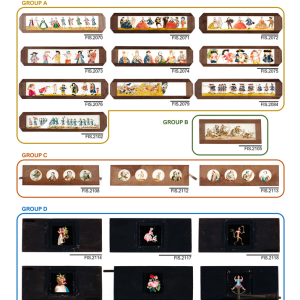
• Through the limelight: analysing the earliest collection of magic lantern glass slides in Portugal

AbstractThe magic lantern, developed in the mid-17th century, was the first optical instrument for projecting transparent images painted on glass slides. It became a powerful tool for scientific and religious education, entertainment, and advertising thro
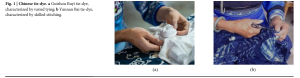
• A three-dimensional visualization model for intangible heritage of tie-dye handicrafts

AbstractThis study focuses on the three-dimensional visualization of intangible cultural heritage of the tie-dye handicraft, proposing a craft logic-oriented virtual modeling method to reconstruct fabric shaping and dyeing in virtual space. Based on a par
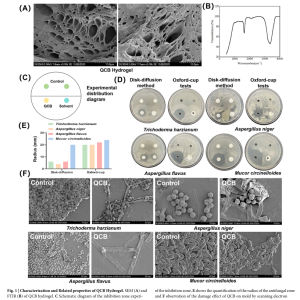
• Smart packaging solution: Na2B8O13·4H2O-loaded QCS/PAM double-network hydrogel for microbial control in paper heritage preservation

AbstractArchive storage boxes are preventive tools used by museums and archives to mitigate the impact of adverse external factors. In this study, quaternized chitosan and polyacrylamide double-network gel were used to load sodium octaborate tetrahydrate,

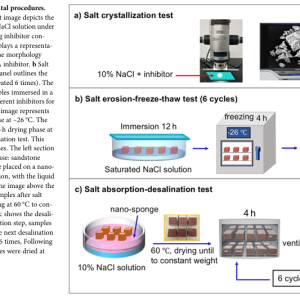
• Remedy for NaCl-induced sandstone weathering via crystallization inhibition by environmentally friendly iron tartrate

AbstractSalt weathering poses a major threat to porous sandstone in cultural heritage. Iron-tartrate complexes have been proposed to modify NaCl crystallization behavior and prevent clumping. However, their efficacy in stone conservation has remained unve

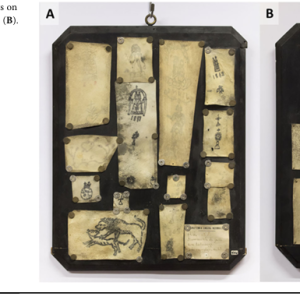
• Scientific analysis and preservation protocols for tattooed skin specimens from “Luigi Cattaneo” anatomical wax collection

Monia Vadrucci, Cristina Cicero, Carlotta Letizia Zanasi, Chiaramaria Stani, Ester Orsini, Elisa Lodolo, Luis Guillermo Garcia Ordonez, Cristina Nisi, Claudia De Rose, Andres Cicuttin, Maria Liz Crespo, Lisa Vaccari Stefano Rattinpj Heritage Science volu

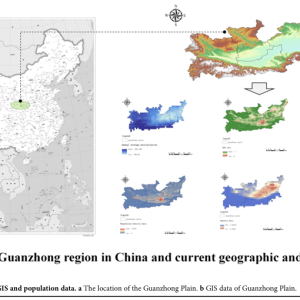
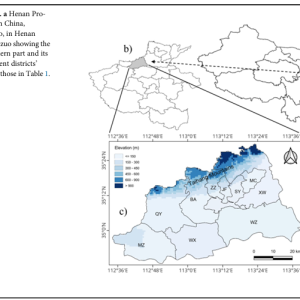
• The impact of climate change in Guanzhong from the Western Zhou Dynasty to the Qing Dynasty on the evolution of tomb layout

AbstractThe Guanzhong region, a major political and cultural center in ancient China, is known for its imperial and noble tombs with symmetrical, central-axis layouts that reflect hierarchical order and feng shui principles. These tombs, often aligned wit

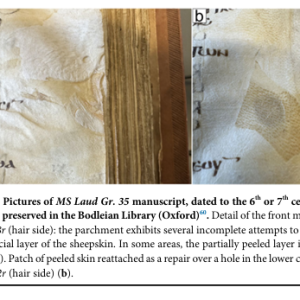
• Peeling back the past: sheepskin delamination and patch repairs in parchment

Marine Appart, Jiří Vnouček, Marc Fourneau, Nicolas Gros, Francesca Cecchet, Yves Poumay, Caroline Canon, Matthew James Collins Olivier Deparisnpj Heritage Science volume 13, Article number: 665 (2025)AbstractThe ability of sheepskin to delaminate has be

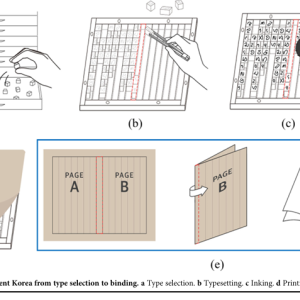
• Inferring typesetting board counts in early Korean metal-type printing via character-structure similarity

AbstractWhile movable metal-type printing in Goryeo and Joseon dynasties enabled efficient book production, certain aspects of the process remain insufficiently understood. We propose a method to estimate the number of typesetting boards used in historica

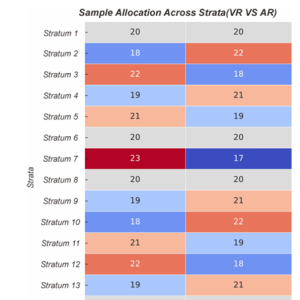
• Evaluating knowledge transfer mechanisms and outcomes of VR/AR for cultural-heritage serious games

AbstractThis study, conducted at the Shimao archeological site in Shaanxi, developed content-equivalent VR and AR serious games using a stratified randomized parallel-group design (N = 80). A 45-min experiment with assistant-blinded and analyst-blinded pr

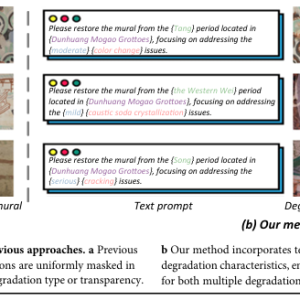
• All-in-one mural restoration with prompt-guided residual diffusion

AbstractAncient murals, as invaluable cultural heritage, are prone to degradation from natural erosion and human activities. Traditional manual restoration methods have inherent limitations, which in turn make virtual restoration a promising and innovativ

• A metrological method for manufacturing quality assessment and classification of ancient Egyptian stone vessels

AbstractPredynastic Egyptian stone vessels offer unique insight into the technological sophistication of early cultures. Thousands of stone vessels were created during the Predynastic Period. Many objects lack archaeological context due to looting and hap

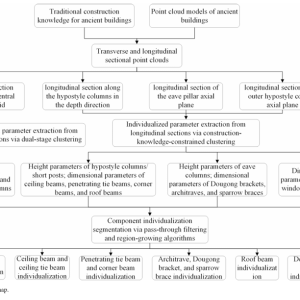
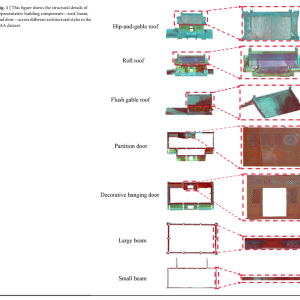
• Individual segmentation method of ancient architectural components based on point cloud and construction techniques

AbstractThe risks of aging, damage, and disappearance of ancient buildings are becoming increasingly severe. Three-dimensional digital technology is increasingly crucial for their protection, restoration, and research. Addressing the low efficiency and po

• Exploring spatial visual characteristics of scenic archetypes through AI multimodal mapping methods in Hangzhou Westlake

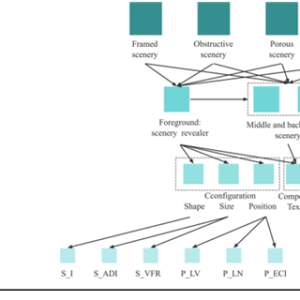
AbstractTraditional Chinese gardens embody sophisticated spatial design principles often described through abstract terms like “scenic archetypes,” yet systematic methods for analyzing their visual spatial characteristics remain underdeveloped. This study

• From fragments to faces: using metrological analysis for artefact re-identification and provenience attribution

AbstractFocusing on Graeco-Roman cartonnage masks from the Kellis 1 Cemetery (Dakhleh Oasis, Egypt) and a previously uncontextualised mask at the Ny Carlsberg Glyptotek, Copenhagen, this study applies high-resolution 3D scanning, deviation mapping, and di

• A deep learning-based method for identifying traditional villages across cultural types

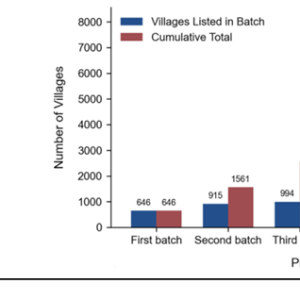
AbstractTo address the challenge of Identifying traditional villages of diverse cultural types, this paper proposes an intelligent image classification method based on deep learning. We use five cultures—Hakka, Linchuan, Luling, Yuanzhou, and Yuzhang—as c

• Ancient waterlogged ivory: tracing its origin through DNA analysis and spectrometric methodologies

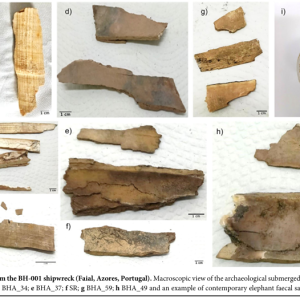
Marina Costa, Cláudia S. L. Vicente, Margarida Espada, Jorge M. S. Faria, Jorge Ginja Teixeira, José Bettencourt Dora Martins Teixeiranpj Heritage Science volume 13, Article number: 672 (2025)AbstractUnderwater archaeological excavations at a shipwreck l

• Exterior paint layers at Abeline’s farm: multi-analytical study of 19th–20th century pigments

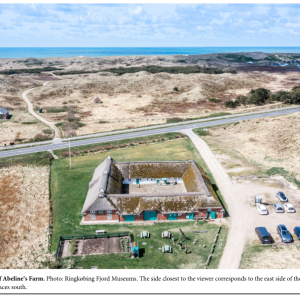
npj Heritage Science volume 13, Article number: 674 (2025)Teodora Boyadzhieva, Michael Højlund Rasmussen, Bjarke Jensen, Arne Jouttijärvi, Arkadiusz Goszczak, Jacek Fiutowski, Caroline E. Larsen Lasse Kristian Taagelund HedegaardAbstractA renovation of t

• OraGAN: a deep learning based model for restoring Oracle Bone Script Images

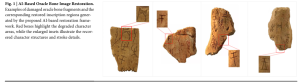
AbstractOracle bone script, China’s earliest known mature writing system, epitomizes ancient Chinese civilization’s origins. However, many characters are severely damaged by temporal degradation and natural erosion, complicating their interpretation. Thus

• Yongle Palace murals’ image restoration using deep learning optimization algorithms

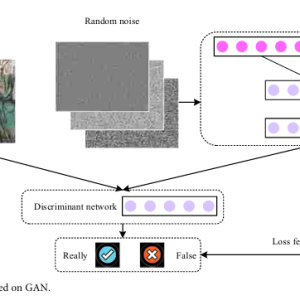
AbstractThis study uses generative adversarial networks to address the issues of weathering and pigment fading in the murals of Yongle Palace. It also introduces various attention mechanisms for comparison and takes into account structural information, te

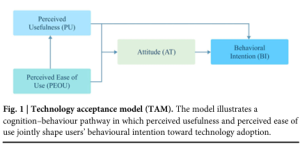
• Preserving China’s Intangible Cultural Heritage through AR/VR storytelling, social media, and AI narratives

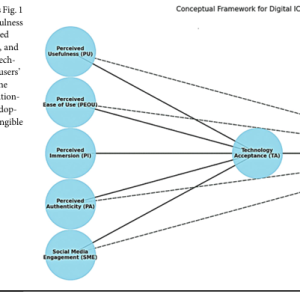
AbstractIntangible Cultural Heritage (ICH) has always been a major component of cultural identity and its safeguarding through digital technologies has also been developing. The current research merges the Technology Acceptance Model (TAM) witeth Media Ri

• Image super resolution of Thangka murals using multi-scale feature assisted transformer and hybrid attention

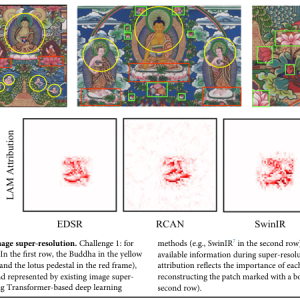
AbstractThangka murals are vital Tibetan cultural heritage. However, existing digital images face insufficient clarity, often limited to resolutions below 1024 × 1024 pixels, which hinders cultural preservation and analysis. Despite their potential, Trans

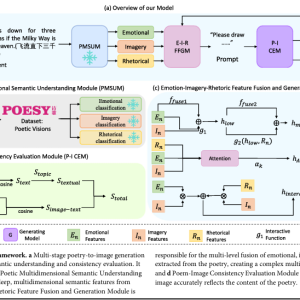
• Visualizing poetry with deep semantic understanding and consistency evaluation

AbstractPoetry-to-image generation aims to translate abstract poetic language into visual art, but existing methods fail to capture deep emotions and artistic essence, producing images that lack the poem’s aesthetic quality. To address this, we propose a

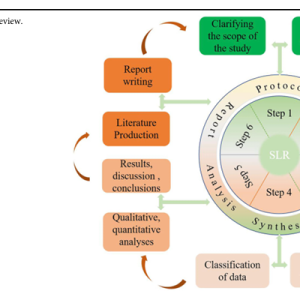
• Progress in research on the ecosystem service driving mechanisms: implications for the Karst World Heritage sites

AbstractUnderstanding ecosystem service driving mechanisms (ESDM) is essential to ensure the sustainable utilization of ecosystem services (ES). However, a systematic assessment of ESDM is still lacking. To address this gap, this study used a systematic l

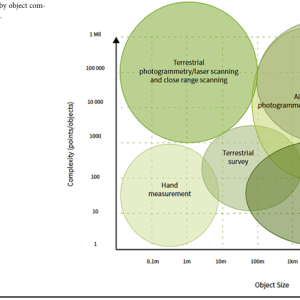
• Transforming architectural heritage documentation: developing integrated European recommendations for safeguarding and preservation

Jakub Markiewicz, Patryk Kot, Andreas Georgopoulos, Agnieszka Bocheńska, Magomed Muradov, Mona Hess, Karol Czajkowski, Dorota Zawieska Angeliki Antoniounpj Heritage Science volume 13, Article number: 622 (2025)AbstractThe safeguarding and preservation of

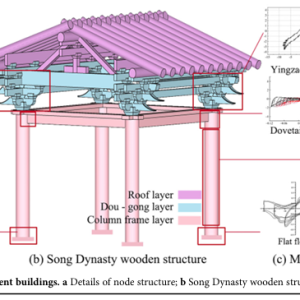
• 'Three strong and three weak’ seismic-resistant wisdom of ancient Chinese wooden structures

AbstractAncient Chinese wooden structures exhibit remarkable organic characteristics, reflected in their highly integrated construction and exceptional seismic performance. To explore the seismic-resistant wisdom inherent in ancient wooden structures, thi

• Explainable artificial intelligence with negative sample optimization for archaeological site prediction in Surkhandarya Uzbekistan

AbstractArchaeological Predictive Model is crucial for efficient site identification but faces challenges like high uncertainty in negative samples, limited accuracy, and simplistic analyses of site-environment interactions. This study, based on 189 Kusha

• Remote sensing diagnosis of ecosystem resilience dynamics in agricultural heritage landscapes

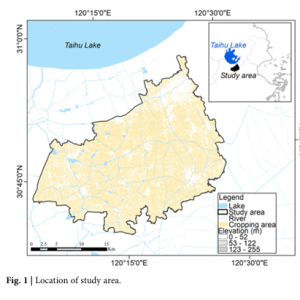
AbstractAgricultural heritage landscapes are complex socio-ecological systems increasingly challenged by human pressures and climate change, yet the mechanisms underlying their ecosystem resilience remain unclear. This study combines time-series remote se

• Segmenting of historic landscape system along Jiangnan Canal based on deep learning and multimodal geodata

AbstractAs a living heritage, the Jiangnan Canal landscape features interwoven natural and artificial water networks. To accurately interpret its overall spatial composition and address heritage sustainability challenges, this study proposes Geo-SegFormer

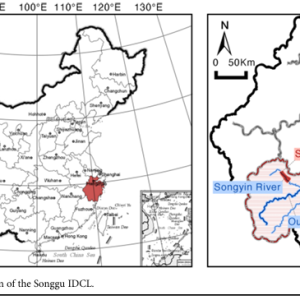
• Spatial form and formation process of irrigation district cultural landscapes: the Songgu irrigation District, Zhejiang, China

AbstractConsidering the threat of urbanization, exploring the multilevel spatial characteristics of irrigation district cultural landscapes (IDCLs) is crucial for their sustainable conservation. This study employs a multiscale framework and interdisciplin

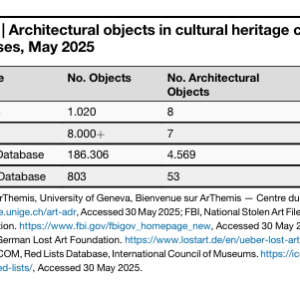
• Interoperable provenance data for heritage crime monitoring of architectural elements

The illicit trade of architectural elements poses a long-standing challenge to cultural heritage conservation yet remains largely overlooked. This paper highlights the need to interlink heritage metadata and visual data for identifying architectural eleme

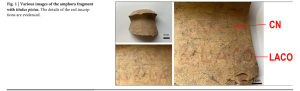
• Multi-analytical study of shaping firing and painted inscriptions in a Roman Titulus Pictus amphora

npj Heritage Science volume 14, Article number: 3 (2026)Martina Bernabale, Luca Buccini, Pierfrancesco Atanasio, Alessia Sanna, Anna Candida Felici, Daniele Passeri, Marco Rossi, Paolo Binaco Danilo DiniAbstractDuring the Roman period, amphorae were esse

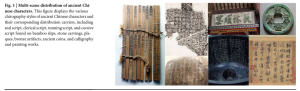
• AttGraph disentangling confusable ancient Chinese characters via component-correlation synergy

AbstractWith three millennia of evolution history, ancient Chinese characters present unique challenges for intelligent recognition systems due to severe degradation and stylistic variations, causing notable intra-class variation and reduced inter-class s

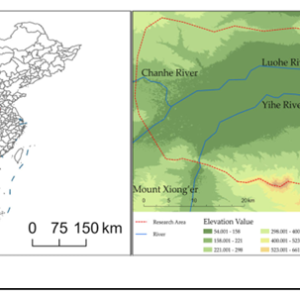
• Spatiotemporal evolution of capitals and settlements in the Luoyang Basin from the Xia to Han-Wei periods

AbstractThis GIS-based study examines the spatiotemporal evolution of 1085 settlements and capitals in the Luoyang Basin from the Xia to Han-Wei periods (c. 2070 BCE—534 CE). Settlement patterns transitioned from a dispersed, multi-centric cluster to a pr

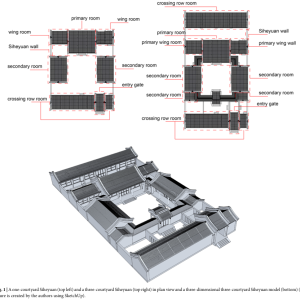
• A parametric approach to investigate the influence of Fengshui on traditional Chinese courtyard dwelling design

AbstractSiheyuan, a traditional Chinese courtyard dwelling, is the cultural heritage where Fengshui, the ancient Chinese superstitious geomancy, is embedded. This paper presents a novel parametric approach to interpret the Fengshui theory Li Qi computatio

• Generation Z preferences for cultural heritage landscapes using questionnaire and neuroscience ERP methods

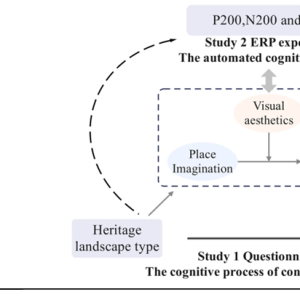
AbstractIn the context of heritage tourism development, accurately identifying the preferences of new-generation tourists is critically important. Based on dual-process theory, this paper combines questionnaire surveys with neuroscience (ERP) techniques t

• Spectral and biomolecular evidence from fibers of two Hexi Corridor ancient turquoise mining sites

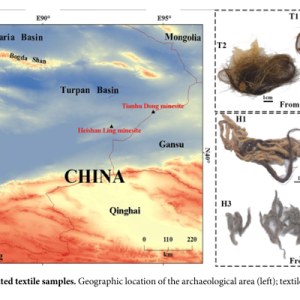
AbstractIdentifying ancient textile fibers is crucial for conservation and reflects ancient subsistence and economic practices. This study investigates fiber and textile fragments from two neighboring turquoise mining sites in the Hexi Corridor, dating to

• Mechanisms and effects of the water seepage environment on the deterioration of stone cultural relics

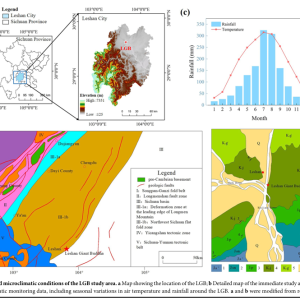
AbstractWater seepage can accelerate the deterioration of stone, but previous experimental studies often only focused on a single solution, ignoring the complexity of the natural water environment. In this study, sandstone samples from two strata of Lesha

• TCSMAF: twin cascade spatial multi-scale attention filtering inpainting of traditional Chinese painting

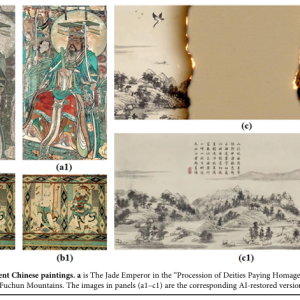
AbstractThe preservation of cultural artifacts is vital for maintaining historical continuity, particularly for traditional Chinese paintings that often suffer from decay and damage over time. Existing inpainting methods struggle to simultaneously recover

• Agricultural heritage preservation and rural vitality promotion: analyzing structural features and driving mechanisms in spatial correlation networks

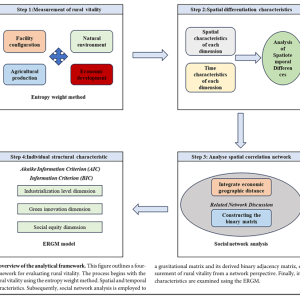
AbstractRural population contraction and vitality decline pose universal challenges amid global industrialization and urbanization. This study adopts an integrated framework combining entropy weight method, gravity model, social network analysis, and expo

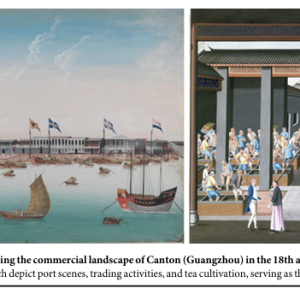
• Mapping geopolitical dynamics of vessel typology in Qing-era Guangdong via export paintings-based computational text analysis

AbstractExisting studies have primarily focused on how the functional evolution of vessels responded to external demands, and many have overlooked the influence of regional institutional contexts and global trade networks. Drawing on computational text an

• Scientific analysis of han dynasty iron artifacts excavated from the Luojiaba Site in Southwest China

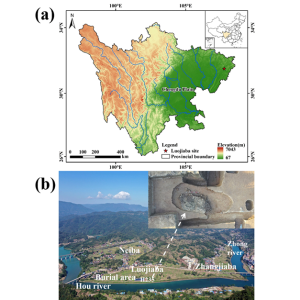
AbstractSeventeen Han Dynasty iron artifacts from the Luojiaba site, including materials from unit H235 and a burial area, were analyzed using metallography and SEM–EDS. The results indicate the concurrent use of cast iron and wrought iron/steel technolog

• Study of Go stones unearthed from the tomb of Fan Xiaocun of the Northern Song Dynasty

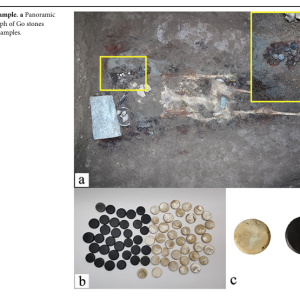
AbstractWhile Go embodies the profound cultural heritage of the Chinese nation, archaeological research on it remains limited, particularly concerning Go-related cultural artifacts. We employed a suite of analytical techniques—including high-depth-of-fiel

• Prediction of the Effects of Indoor Relative Humidity on Moisture and Salt Migration in Earthen Sites at the Emperor Qin’s Mausoleum Site Museum

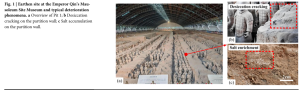
AbstractDesiccation cracking and salt accumulation are major deterioration mechanisms in earthen sites within site museums, primarily caused by coupled moisture and salt migration under controlled environmental conditions. However, limited research on soi

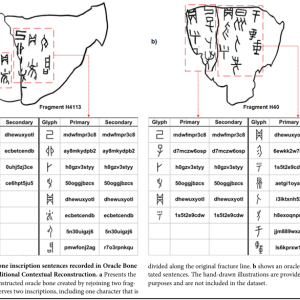
• A multi-modal dataset and method for bone-level association prediction in oracle bone inscriptions

Han Zhang, Taozhi Wang, Zhan Zhang, Bang Li, Hua Sun, Chengbin Hou, Nan Wang, Yang Yu, Qingju Jiao, Jing Xiong Yongge Liunpj Heritage Science volume 14, Article number: 19 (2026)AbstractOracle bone inscriptions are China’s earliest writing system, dating

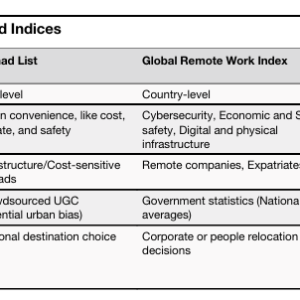
• Mapping the attractiveness of globally important agricultural heritages to digital nomads: a stakeholder-driven, multi-criteria evaluation framework

AbstractGlobal agricultural heritage systems (GIAHS), recognized for their biocultural significance, is facing a critical challenge of balancing preservation with development. Despite digital nomads’ potential to generate low-impact heritage revitalizatio

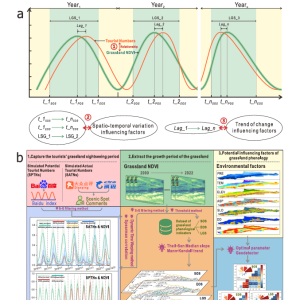
• Grassland phenology dynamics and tourism dependence in Narat Shan of the Tianshan World Natural Heritage Site, China

AbstractGrassland phenology plays a critical role in ecosystem functioning and tourism dynamics in natural heritage sites. Focusing on Narat Shan of the Tianshan World Natural Heritage Site, this study integrates multi-source remote sensing, meteorologica

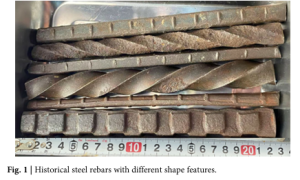
• Experimental study on mechanical behavior and bond-slip of historical Chinese rebars during 1912 to 1949

AbstractRecognizing the unique construction nature and significance of historical reinforced concrete structures (1912–1949 in China), targeted research is vital for conservation strategies. This study collected and sorted six types of historical steel re

• Learning discriminative universal background knowledge for few-shot point cloud semantic segmentation of architectural cultural heritage

AbstractFew-shot point cloud semantic segmentation (FS-PCSS) is crucial for architectural heritage digitization, as it segments unseen categories with minimal annotations. However, existing methods focus on target features while neglecting background mode

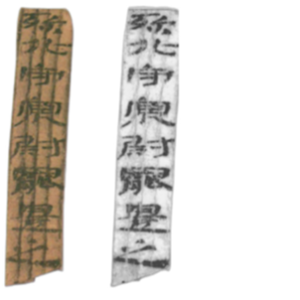
• SSA-based adaptive infrared-visible image fusion for ink enhancement in ancient bamboo slips

Qiang Zhang, Jiazhen Qin, Ying Qi, Teng Wan, Shanxiong Chen, Lixin Yang, Chenyang Wang, Xin Zhang, Jintan Han Fengchen Qinpj Heritage Science volume 14, Article number: 25 (2026)AbstractJiandu, ancient China’s primary writing medium before paper, frequen

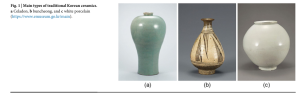
• Explainable machine learning-based classification of traditional Korean ceramics using XRF chemical composition data

AbstractThis study presents an explainable machine learning approach for classifying traditional Korean ceramics, including celadon, buncheong, and white porcelain, based on X-ray fluorescence chemical composition data. A curated dataset of 624 samples wa

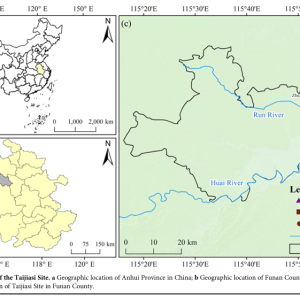
• Analyzing the surface black discoloration of oracle plastrons from the Taijiasi Site, China

AbstractSeveral Shang and Zhou Dynasty oracle plastrons from the Taijiasi Site (Funan, Anhui, China) exhibit random flake- or patch-like surface black deposits unlikely induced by burning or pyromancy. Scanning electron microscopy-energy dispersive X-ray

• Ladder-side mixture of experts adapters for bronze inscription recognition

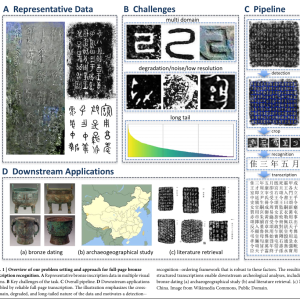
AbstractBronze inscriptions (BI), engraved on ritual vessels, constitute a crucial stage of early Chinese writing and provide indispensable evidence for archeological and historical studies. However, automatic BI recognition is challenging due to visual d

• Landscape ecological risk assessment and driving factors in Guyi Basin cultural heritage sites: a multi-scenario simulation perspective

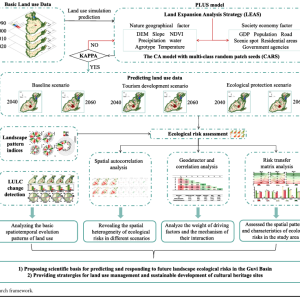
AbstractAssessing landscape ecological risk (LER) is vital for sustainability in ecologically fragile regions. However, LER in cultural heritage sites remains insufficiently explored. Using Guyi Basin as a case study, this study analyzes LER dynamics unde

• APLDiff: an adaptive perception-driven lightweight diffusion framework for digital mural inpainting

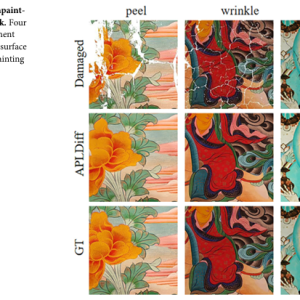
AbstractMural degradation presents significant challenges to cultural heritage preservation. To address this, a hierarchical mural inpainting model, APLDiff, based on a lightweight diffusion model, is proposed. A physics-based degradation simulation is in

• Multi-view image fusion using knowledge distillation for classification of ancient glass beads excavated in Japan

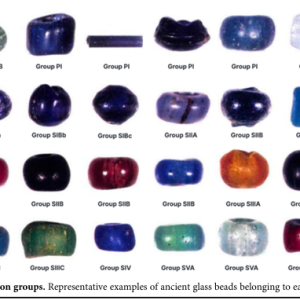
AbstractAncient glass beads excavated across Japan are key materials for understanding cultural exchanges across the Eurasian continent. Conventional analysis relies on expert inspection and chemical composition measurements, making large-scale investigat

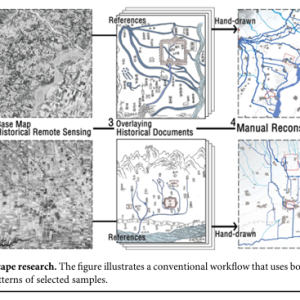
• Multimodal intelligent reconstruction-driven digital regeneration of cultural heritage in Qing Dynasty tea plantation landscapes

AbstractAdvances in AI, particularly deep learning, are transforming the protection and utilization of historical and cultural landscapes. This study proposes a comprehensive digital regeneration workflow for fragmented historical images that systematical

• Exploring the drivers of users' adoption of museum digital humans

AbstractDigital humans are emerging as innovative media for interpreting the cultural heritage value of museums. Based on the Technology Acceptance Model, this study examines how information richness, information quality, aesthetic experience, and flow ex

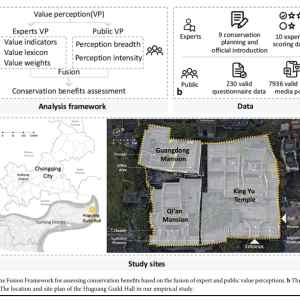
• A fusion framework to bridge expert and public perception gaps in cultural heritage conservation

AbstractCultural heritage (CH) conservation has long been shaped by expert value perceptions (EVP), while public perspectives remain underrepresented. With the growing recognition of CH’s role in urban social sustainability, there is a need to move beyond

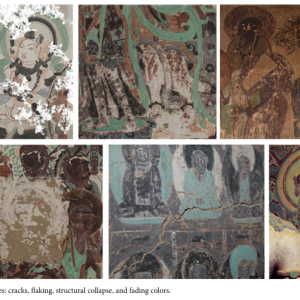
• DiffuMural: a diffusion model for dunhuang murals restoration via multi-scale convergence and cooperative guidance

AbstractAncient mural restoration is a challenging conditional image-generation problem because of large missing regions, semantic ambiguity, and strict demands for cultural and stylistic fidelity. We present DiffuMural, a multi-stage, condition-guided di

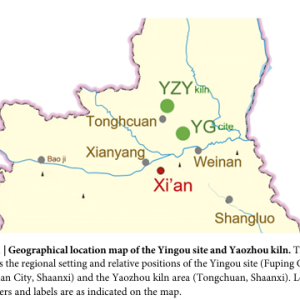
• Provenance study of Tang-dynasty black-glazed porcelains unearthed at the Yingou site

AbstractThis study investigates the provenance of Tang-dynasty black-glazed porcelain excavated from the Yingou site in Fuping, Shaanxi, through comparative analysis with authenticated Tang-dynasty Yaozhou kiln samples. A multi-analytical approach combini

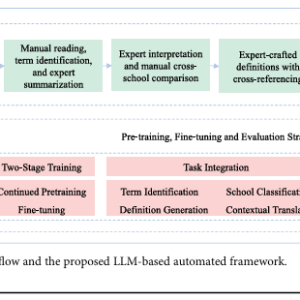
• Automatic compilation of a Pre-Qin philosophy lexicon via large language models

AbstractPre-Qin philosophy is foundational to Chinese intellectual history, but its terminology features polysemy, contextuality, and school-specific variation, posing challenges to manual dictionary compilation. This study proposes an automatic lexicon c

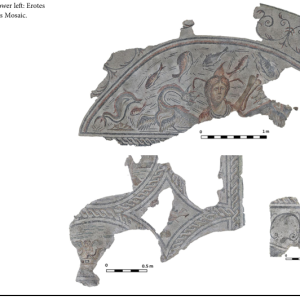
• Integrated portable spectroscopy for the analysis of Roman mosaics from Marroquíes Altos, Jaén, Spain

AbstractThis study presents an integrated archaeometric analysis of three key Roman mosaics (Tethys, Erotes, and Scrollworks) from the Marroquíes Altos site (Jaén, Spain), currently displayed at the Museum of Jaén. The aim was to enhance their historical

• Determination of interfacial heat transfer coefficient between bronze and loess-based molds in Bronze Age China

AbstractIn early Chinese civilization loess-based clay mold technology was instrumental to both the mass production of ritual bronzes and the development of metallurgical traditions. A comprehensive understanding of ancient Chinese bronze casting technolo

• Spatial pattern and species diversity of heritage trees as living monuments in a historic Chinese city

AbstractHeritage trees are vital natural-cultural heritage, contributing to regional biodiversity with significant social, cultural, and ecological values. Understanding their spatial patterns in relation to environmental and anthropogenic factors can inf

热门信息

img

地址:陕西省西安市碑林区友谊西路68号小雁塔历史文化公园
邮件:secretariat#iicc.org.cn
电话:(+86)029-85246378