丝路遗产丝绸之路:长安天山廊道的路网-丝路资讯 -

丝路资讯

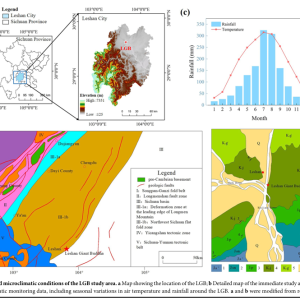
• Mechanisms and effects of the water seepage environment on the deterioration of stone cultural relics

AbstractWater seepage can accelerate the deterioration of stone, but previous experimental studies often only focused on a single solution, ignoring the complexity of the natural water environment. In this study, sandstone samples from two strata of Lesha
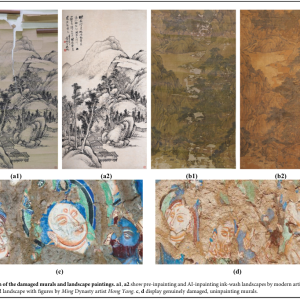
• TCSMAF: twin cascade spatial multi-scale attention filtering inpainting of traditional Chinese painting

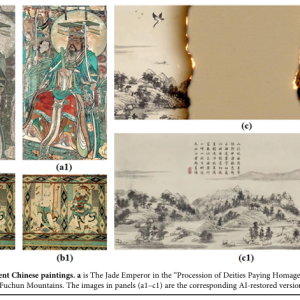
AbstractThe preservation of cultural artifacts is vital for maintaining historical continuity, particularly for traditional Chinese paintings that often suffer from decay and damage over time. Existing inpainting methods struggle to simultaneously recover

• Mapping geopolitical dynamics of vessel typology in Qing-era Guangdong via export paintings-based computational text analysis
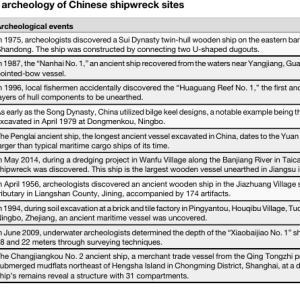
AbstractExisting studies have primarily focused on how the functional evolution of vessels responded to external demands, and many have overlooked the influence of regional institutional contexts and global trade networks. Drawing on computational text an

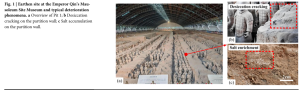
• Prediction of the Effects of Indoor Relative Humidity on Moisture and Salt Migration in Earthen Sites at the Emperor Qin’s Mausoleum Site Museum

AbstractDesiccation cracking and salt accumulation are major deterioration mechanisms in earthen sites within site museums, primarily caused by coupled moisture and salt migration under controlled environmental conditions. However, limited research on soi

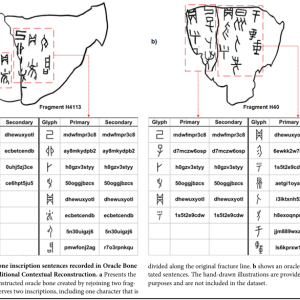
• A multi-modal dataset and method for bone-level association prediction in oracle bone inscriptions

Han Zhang, Taozhi Wang, Zhan Zhang, Bang Li, Hua Sun, Chengbin Hou, Nan Wang, Yang Yu, Qingju Jiao, Jing Xiong Yongge Liunpj Heritage Science volume 14, Article number: 19 (2026)AbstractOracle bone inscriptions are China’s earliest writing system, dating

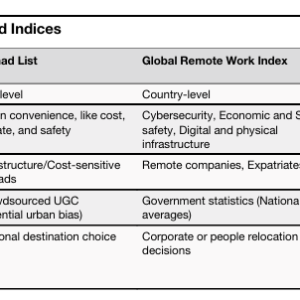
• Mapping the attractiveness of globally important agricultural heritages to digital nomads: a stakeholder-driven, multi-criteria evaluation framework

AbstractGlobal agricultural heritage systems (GIAHS), recognized for their biocultural significance, is facing a critical challenge of balancing preservation with development. Despite digital nomads’ potential to generate low-impact heritage revitalizatio

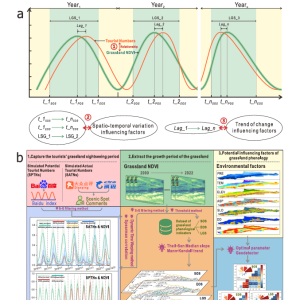
• Grassland phenology dynamics and tourism dependence in Narat Shan of the Tianshan World Natural Heritage Site, China

AbstractGrassland phenology plays a critical role in ecosystem functioning and tourism dynamics in natural heritage sites. Focusing on Narat Shan of the Tianshan World Natural Heritage Site, this study integrates multi-source remote sensing, meteorologica

• Heritage knowledge meets microclimate: CFD–UTCI validation of Eight Mansions orientation in southern Fujian, China

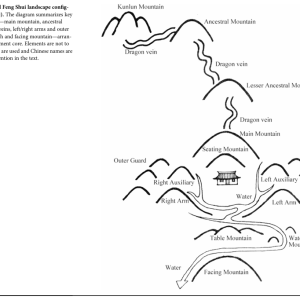
AbstractWe test whether orientation rules in the Eight Mansions (Ba Zhai) tradition align with microclimatic comfort in a hot–humid setting. Using CFD coupled with the Universal Thermal Climate Index (UTCI), we simulated 24 rotational orientations of a ty

• Experimental study on mechanical behavior and bond-slip of historical Chinese rebars during 1912 to 1949

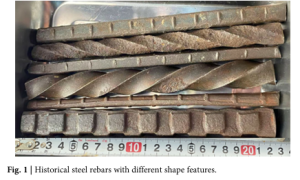
AbstractRecognizing the unique construction nature and significance of historical reinforced concrete structures (1912–1949 in China), targeted research is vital for conservation strategies. This study collected and sorted six types of historical steel re

• Learning discriminative universal background knowledge for few-shot point cloud semantic segmentation of architectural cultural heritage

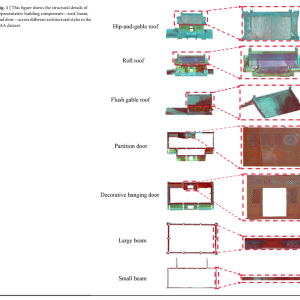
AbstractFew-shot point cloud semantic segmentation (FS-PCSS) is crucial for architectural heritage digitization, as it segments unseen categories with minimal annotations. However, existing methods focus on target features while neglecting background mode

• SSA-based adaptive infrared-visible image fusion for ink enhancement in ancient bamboo slips

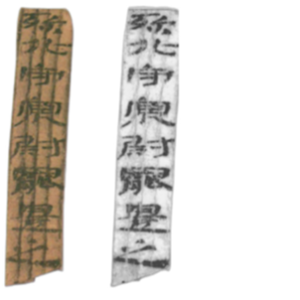
Qiang Zhang, Jiazhen Qin, Ying Qi, Teng Wan, Shanxiong Chen, Lixin Yang, Chenyang Wang, Xin Zhang, Jintan Han Fengchen Qinpj Heritage Science volume 14, Article number: 25 (2026)AbstractJiandu, ancient China’s primary writing medium before paper, frequen

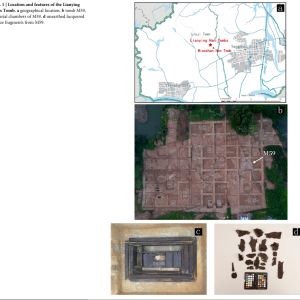
• Characterization and Identification of the lacquered gauze excavated from Lianying Han Tomb in China

AbstractFor conservation and restoration purposes, the multi-analytical methods including optical microscopy (OM), scanning electron microscopy (SEM), Fourier transform infrared spectroscopy (FTIR) and thermally assisted hydrolysis-methylation pyrolysis-g

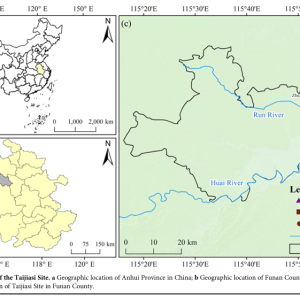
• Analyzing the surface black discoloration of oracle plastrons from the Taijiasi Site, China

AbstractSeveral Shang and Zhou Dynasty oracle plastrons from the Taijiasi Site (Funan, Anhui, China) exhibit random flake- or patch-like surface black deposits unlikely induced by burning or pyromancy. Scanning electron microscopy-energy dispersive X-ray

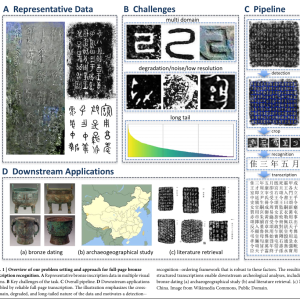
• Ladder-side mixture of experts adapters for bronze inscription recognition

AbstractBronze inscriptions (BI), engraved on ritual vessels, constitute a crucial stage of early Chinese writing and provide indispensable evidence for archeological and historical studies. However, automatic BI recognition is challenging due to visual d

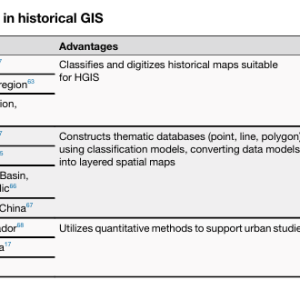
• HGIS based analysis of urban morphological evolution in historic Kaifeng

AbstractHistoric cities face increasing pressure from rapid urbanization, highlighting the need to understand long-term urban morphological evolution for sustainable heritage conservation. This study examines the spatial evolution of Kaifeng from the Nort

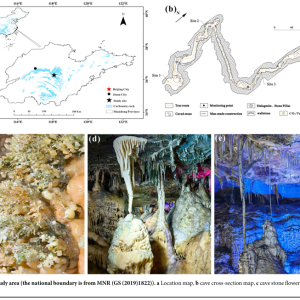
• Dynamic patterns and resilience of cave-air CO₂ under tourism interferences in the Lushan National Geopark, north China

Shengxin Peng, Wen Liu, Tao Zhang, Junbing Pu, Zhiqiang Zhao, Haoran Liu, Yanhao Zhai, Nataša Ravbar, Alena Gessert Eko Haryononpj Heritage Science volume 14, Article number: 31 (2026)AbstractCave-air CO₂, one of the key indicators of cave ecosystem stab

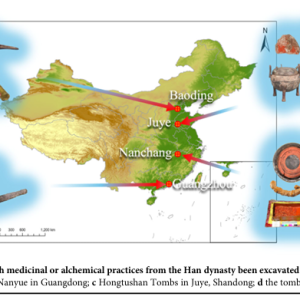
• Geomaterials for medicine or alchemy in a Western Han (206BCE–8CE) Tomb at Hongtushan, Shandong

AbstractThis study examines geomaterials from the Western Han Hongtushan tomb in Shandong, using an integrated analytical approach that includes optical imaging, Raman spectroscopy, handheld XRF, XRD, and EPMA. Several types of geomaterials were identifie

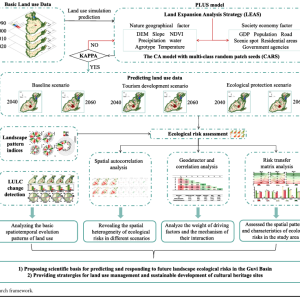
• Landscape ecological risk assessment and driving factors in Guyi Basin cultural heritage sites: a multi-scenario simulation perspective

AbstractAssessing landscape ecological risk (LER) is vital for sustainability in ecologically fragile regions. However, LER in cultural heritage sites remains insufficiently explored. Using Guyi Basin as a case study, this study analyzes LER dynamics unde

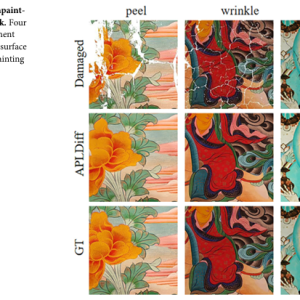
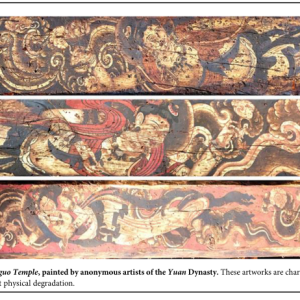
• APLDiff: an adaptive perception-driven lightweight diffusion framework for digital mural inpainting

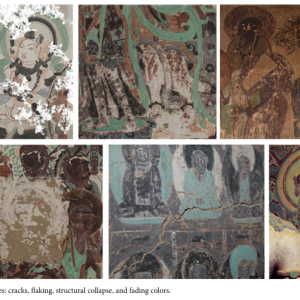
AbstractMural degradation presents significant challenges to cultural heritage preservation. To address this, a hierarchical mural inpainting model, APLDiff, based on a lightweight diffusion model, is proposed. A physics-based degradation simulation is in

• Immersive VR technology validation for Fujian Tulou heritage

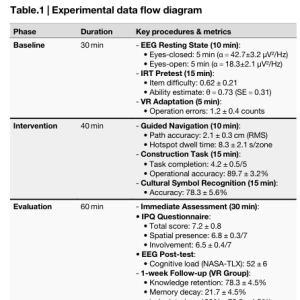
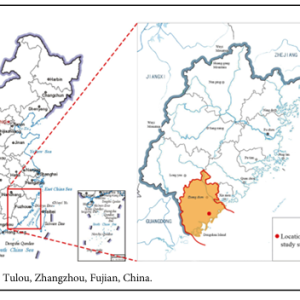
AbstractIn the context of global cultural integration, the preservation of cultural heritage is faced with dual challenges of inheritance and innovation. It is clear that this study takes Fujian Tulou as a case study and tries to propose a Cultural Visual

• Exploring the drivers of users' adoption of museum digital humans

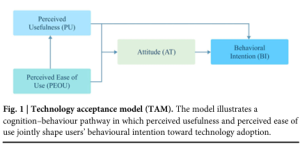
AbstractDigital humans are emerging as innovative media for interpreting the cultural heritage value of museums. Based on the Technology Acceptance Model, this study examines how information richness, information quality, aesthetic experience, and flow ex

• A fusion framework to bridge expert and public perception gaps in cultural heritage conservation

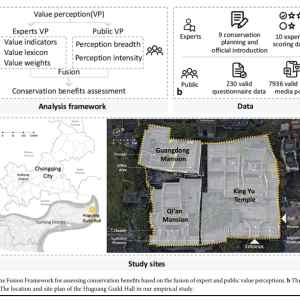
AbstractCultural heritage (CH) conservation has long been shaped by expert value perceptions (EVP), while public perspectives remain underrepresented. With the growing recognition of CH’s role in urban social sustainability, there is a need to move beyond

• DiffuMural: a diffusion model for dunhuang murals restoration via multi-scale convergence and cooperative guidance

AbstractAncient mural restoration is a challenging conditional image-generation problem because of large missing regions, semantic ambiguity, and strict demands for cultural and stylistic fidelity. We present DiffuMural, a multi-stage, condition-guided di

• Determination of interfacial heat transfer coefficient between bronze and loess-based molds in Bronze Age China

AbstractIn early Chinese civilization loess-based clay mold technology was instrumental to both the mass production of ritual bronzes and the development of metallurgical traditions. A comprehensive understanding of ancient Chinese bronze casting technolo

• Spatial pattern and species diversity of heritage trees as living monuments in a historic Chinese city

AbstractHeritage trees are vital natural-cultural heritage, contributing to regional biodiversity with significant social, cultural, and ecological values. Understanding their spatial patterns in relation to environmental and anthropogenic factors can inf

• Evidence from Liao dynasty tombs: an empirical analysis of song greenish-white porcelain trade

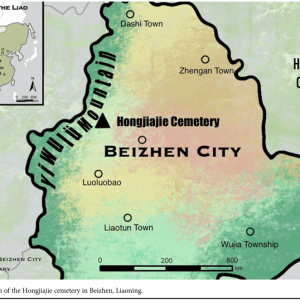
AbstractThis study analyzes 16 pieces of greenish-white porcelain unearthed from the Hongjiajie cemetery, the family burial site of Han Derang of the Liao Dynasty in Beizhen, Liaoning. Using energy-dispersive X-ray fluorescence (EDXRF) and laser ablation

• Dynamic response prediction and safety assessment of suspended ancient wooden structures under tourist-induced pedestrian loads

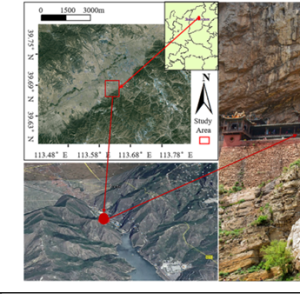
AbstractSuspended ancient timber structures, characterized by complex construction and unique load-transfer mechanisms, are prone to pronounced dynamic responses under pedestrian walking loads. This study aims to systematically investigate the structural

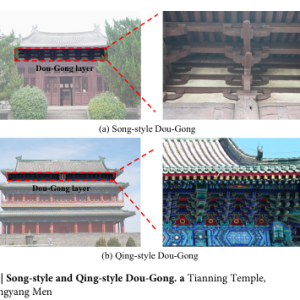
• Experimental and numerical research on the lateral hysteretic behavior and simplified model of typical Dou-Gong in Ming-Qing dynasties

Published: 24 January 2026npj Heritage Science volume 14, Article number: 57 (2026)AbstractDou-Gong is one of the key factors in achieving seismic resistance and energy dissipation for timber architectural heritages. This study carried out experimental an

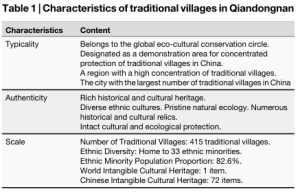
• Designing a traditional village cluster protection-utilization system via complex network analysis: Qiandongnan case study

Published: 27 January 2026npj Heritage Science volume 14, Article number: 59 (2026)AbstractThis study develops a Cluster Protection and Utilization System (CPUS) through complex network analysis to enhance conservation strategies for traditional villages

• DCADif: decoupled conditional adaptive time-dynamic fusion diffusion inpainting of traditional Chinese mural paintings

Published: 28 January 2026npj Heritage Science volume 14, Article number: 61 (2026)AbstractDigital inpainting of traditional Chinese murals is challenged by the difficulty of disentangling intricate structures from unique artistic styles, often leading to

• M3SFormer: multi-stage semantic and style-fused transformer for mural image inpainting

AbstractDigital restoration of ancient murals is crucial for preserving cultural heritage. However, existing methods often suffer from semantic distortion and stylistic inconsistencies when repairing large damaged areas. This paper proposes M3SFormer, an

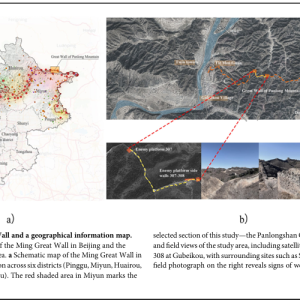
• Non-destructive detection and three-dimensional imaging of internal defects in Beijing Ming Great Wall

AbstractThe Ming Great Wall in Beijing suffers from hidden voids, detachments, and moisture infiltration from long-term weathering and human impacts. Invasive diagnostics risk irreversible damage to this UNESCO site. This study developed a non-destructive

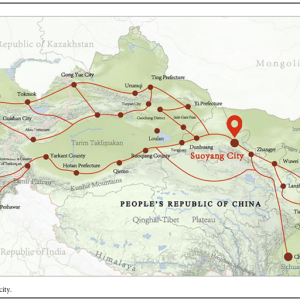
• 锁阳城遗址虚拟重建设计策略Virtual reconstruction design strategy for the Suoyang city site

关于丝绸之路遗址的修复与展示研究相对较少;这些遗址是典型的土遗址,由风蚀沙地和零散的墙体部分组成,地面上几乎没有发现遗存。本研究以锁阳城遗址为例,运用无人机倾斜摄影、三维激光扫描、虚拟现实(VR)、增强现实(AR)和人工智能(AI)等数字技术,构建锁阳城遗址的三维数字模型。通过实地调研,本文分析了游客对遗址的感知价值,提取了修复设计元 ...

• Combined approaches of techno-functional and use-wear analysis indicated diverse reuse behaviors of polished bevelled stone tools of Zoumaling site (5500–3900 cal BP), central China

AbstractAlthough research on ground stone tools has increasingly embraced multidisciplinary approaches over the years, studies on polished stone axes and adzes still lack deeper and dynamic analysis. This paper presents a study of the function and reuse o

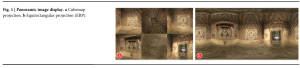
• Transforming panoramic images into 3D experiences for online cultural heritage visualization

AbstractOnline cultural heritage presentations are transitioning from traditional media to immersive 3D displays, yet high-fidelity on-site 3D modeling faces copyright, security, and preservation constraints. This study proposes a deep learning-based 3D r

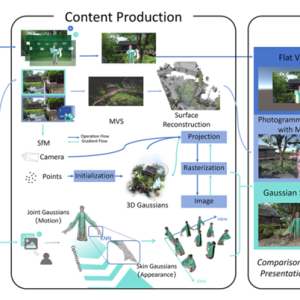
• A dual-prior driven Gaussian splatting framework for high-fidelity reconstruction of museum artifacts

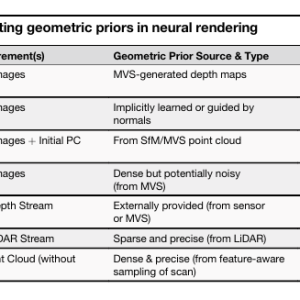
AbstractStandard 3D Gaussian Splatting (3DGS) relies on multi-view images, creating a barrier for museum artifacts archived only as colored point clouds without corresponding registered images. We propose a 3DGS paradigm that operates directly on colored

• Deformation and disease detection of Tulou based on multi-source 3D point cloud fusion

Published: 29 January 2026npj Heritage Science volume 14, Article number: 66 (2026)AbstractThis study applies high-precision industrial metrology to the conservation of rammed-earth buildings (Tulou), establishing a structural health monitoring (SHM) fram

• AIGC based digital heritage reconstruction of Qing interior canopies

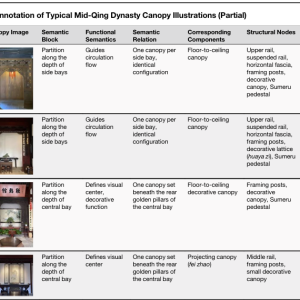
AbstractThis study explores the application of Artificial Intelligence Generated Content (AIGC) to the digital reconstruction of Qing-period interior canopy components, a representative form of traditional Chinese timberwork. To address fragmented archive

• Uncovering historical ceramic color patterns via visual analytics for design and heritage

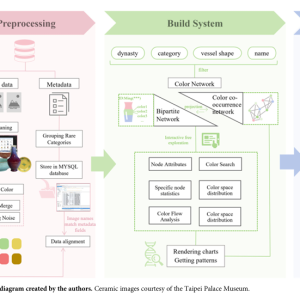
Published: 31 January 2026npj Heritage Science volume 14, Article number: 77 (2026)AbstractTraditional research on ceramic colors relies heavily on qualitative descriptions and subjective judgments. This approach limits the ability to process large-scale

• Archaeometallurgical analysis of bronze Xi from Huofeng hoard in the Wuling Mountains, China

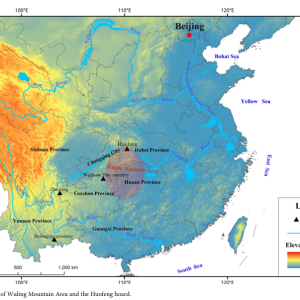
Published: 31 January 2026npj Heritage Science volume 14, Article number: 80 (2026)AbstractDuring the Eastern Han Dynasty, privately produced bronze wares dominated the market, with utilitarian vessels such as Xi and Hu demonstrating significant commercia

• A cross-climate study of solar-loading thermography for heritage: workflow portability via adaptive decomposition, low-rank projection, and active benchmarking

Published: 31 January 2026npj Heritage Science volume 14, Article number: 74 (2026)AbstractOutdoor solar loading thermography (SLT) for cultural heritage is challenged by nonstationary environmental forcing that masks defect responses. This study advances

• Digital heritage integration of Kunqu opera and Suzhou classical gardens

Published: 31 January 2026npj Heritage Science volume 14, Article number: 78 (2026)AbstractIntangible cultural heritage (ICH) loses its foundation for preservation and transmission when separated from inheritors and material contexts. Most current 3D digi

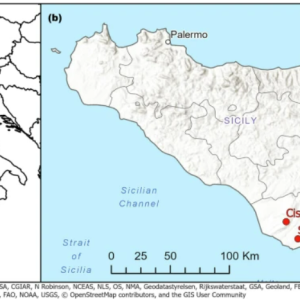
• Isotopes reveal a plant-consuming multi-cultural community in Late Antique Sicily

AbstractLate Antiquity in the Mediterranean region and its border areas marks a period of significant historical change characterised by large-scale population movements and intense cultural interactions that are not yet fully understood. To offer new ins

• Preservation through digitalization

Online platforms help safeguard ancient relics of the Mogao Caves and give tourists and researchers better access to learn about and study their magnificent history, report Xu Lin and Ma Jingna in Dunhuang, Gansu.By Xu Lin and Ma Jingna | CHINA DAILY | Up

热门信息

img

地址:陕西省西安市碑林区友谊西路68号小雁塔历史文化公园
邮件:secretariat#iicc.org.cn
电话:(+86)029-85246378