
遗产数据库
苏丹·萨奥达特建筑群Sultan Saodat Complex
摘要: 苏丹·萨奥达特(Sultan Saodat)建筑群苏丹·萨奥达特是一座陵墓建筑群,安葬着铁尔梅兹的赛义德家族成员。9世纪时,铁尔梅兹赛义德王朝形成,并对国家发展做出了重大贡献。该地区的许多居民认为自己的祖先源自这一古老王朝。主要陵墓群建于12世纪,并在15至17世纪陆续增建。陵墓沿着一条长长的庭院分布,由四座带穹顶的大厅组成。Sultan Saodat Complex, ...
苏丹·萨奥达特(Sultan Saodat)建筑群苏丹·萨奥达特是一座陵墓建筑群,安葬着铁尔梅兹的赛义德家族成员。9世纪时,铁尔梅兹赛义德王朝形成,并对国家发展做出了重大贡献。该地区的许多居民认为自己的祖先源自这一古老王朝。主要陵墓群建于12世纪,并在15至17世纪陆续增建。陵墓沿着一条长长的庭院分布,由四座带穹顶的大厅组成。
Sultan Saodat Complex, Termez
Mausoleum Sultan Saodat, Termez
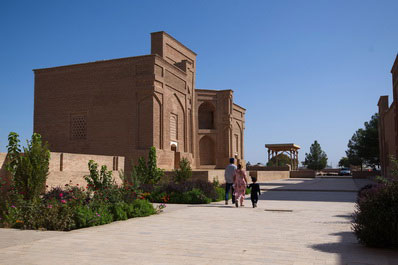
The Sultan Saodat memorial complex is a remarkable ensemble of mausoleums, serving as the final resting place for Sayyids, descendants of the Prophet Muhammad. Sayyid Hasan al-Amir, buried in the main tomb of the ensemble in the 10th century, is revered as the founder of this esteemed Islamic family. A fifth-generation descendant of Fatima, the Prophet's daughter, and Ali, his companion, Sayyid Hasan’s legacy is deeply rooted in Islamic history. The complex also features a mosque and a former khanaka building, which houses additional burials of the dynasty. Nestled on the northeastern outskirts of Termez, far from the city's hustle, Sultan Saodat offers a serene and tranquil atmosphere, inspiring a profound sense of peace in its visitors.
History
Mausoleum Sultan Saodat, TermezMausoleum Sultan Saodat, Termez
The Sultan Saodat complex is closely tied to the history of the region and the Sayyid family, whose members played a significant role in the political and spiritual life of Central Asia. Their burial site became a pilgrimage destination for those wishing to honor this sacred lineage. The Sayyids held a revered position in Muslim society, seen as custodians of grace and spiritual purity, often venerated as saints. They were regarded as key guardians of Islamic values and traditions.
Architecture and Design
Mausoleum Sultan Saodat, TermezMausoleum Sultan Saodat, Termez
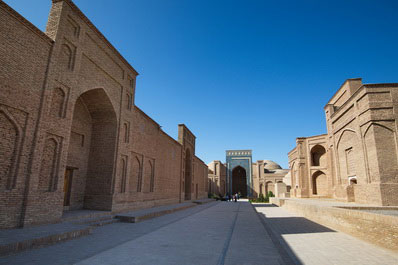
At the heart of the ensemble are two square structures connected by a gallery, each crowned with a massive dome. A grand arched passage, adorned with brick mosaics, stands between the buildings. Surrounding the main tomb are elegant structures that once served as khanakas, homes for Sufis, and also house the tombs of Sayyid family members. The buildings form an elongated courtyard paved with stone.
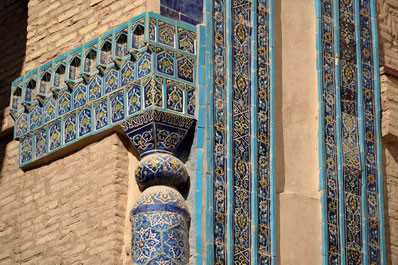
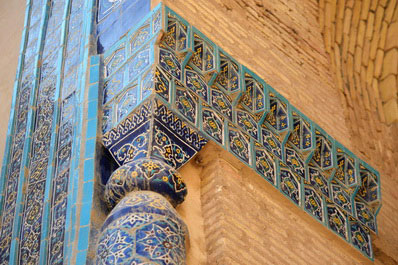
Over centuries, the complex was expanded and renovated, reflecting architectural styles from various eras. The ensemble reached its final form in the 17th century, marked by the last burials and completed decorative work. Its entrance portal, adorned with multicolored majolica, is a striking feature. The intricate brickwork decorating the walls, ceilings, and vaults of the tombs creates a lasting impression. Inside the domes, the intricate arrangement of bricks in spiral patterns symbolizes the connection between the earthly and divine, material and spiritual.
Nearby, the ruins of the former Sultan Saodat madrasah can be found, along with a new mosque featuring a striking blue dome and two tall minarets.
Significance
The Sultan Saodat complex is a unique architectural and historical treasure of immense importance to the Muslim world. It remains a major pilgrimage site, attracting thousands of believers and symbolizing the spiritual heritage that continues to unite generations.