
书籍资料库
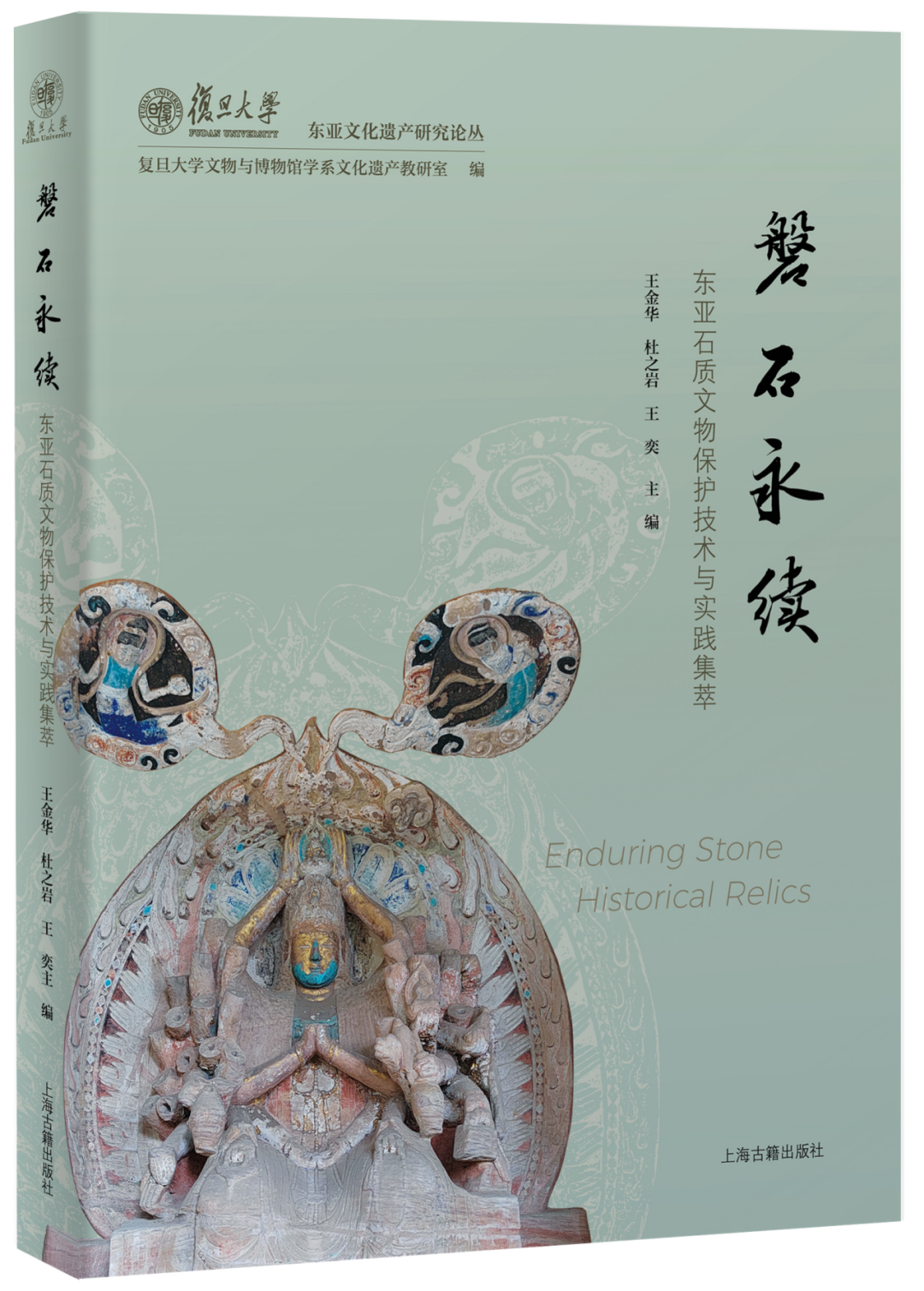
磐石永续:东亚石质文物保护技术与实践集萃
摘要: 磐石永续:东亚石质文物保护技术与实践集萃简介《磐石永续:东亚石质文物保护技术与实践集萃》为复旦大学文物与博物馆学系文化遗产教研室主编“东亚文化遗产研究论丛”之一,系中日韩三国学者协作完成的区域性石质文物保护研究专集,系统呈现了东亚地区在石窟寺、摩崖造像等不可移动石质文化遗产保护领域的最新学术成果与技术实践。本书以物质遗存本体劣化 ...
磐石永续:东亚石质文物保护技术与实践集萃
简介
《磐石永续:东亚石质文物保护技术与实践集萃》为复旦大学文物与博物馆学系文化遗产教研室主编“东亚文化遗产研究论丛”之一,系中日韩三国学者协作完成的区域性石质文物保护研究专集,系统呈现了东亚地区在石窟寺、摩崖造像等不可移动石质文化遗产保护领域的最新学术成果与技术实践。本书以物质遗存本体劣化机理与干预对策为核心关切,通过跨学科研究范式,将精细工程地质学、岩土力学、材料科学、环境考古与预防性保护理论深度融合,构建了从病害诊断、风险评估到科学处置的完整技术链条。
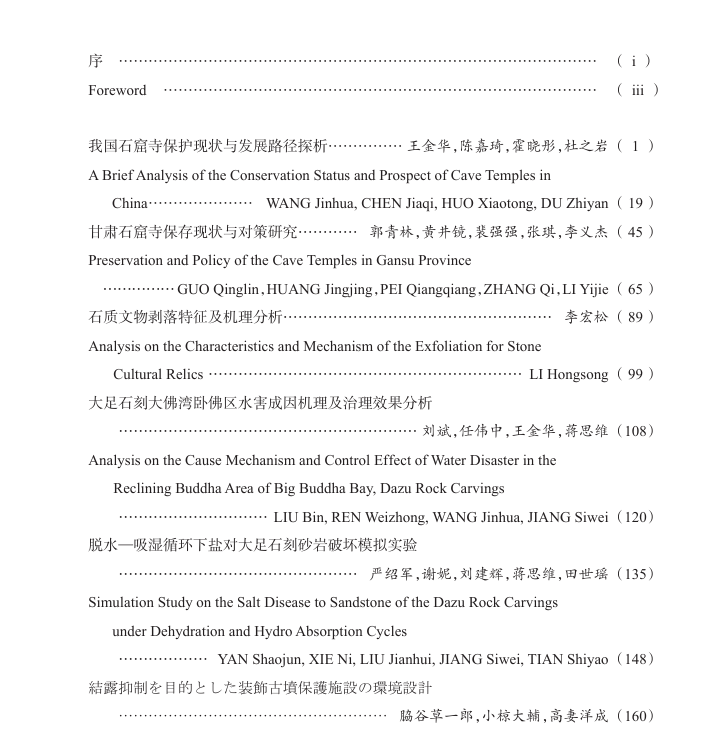
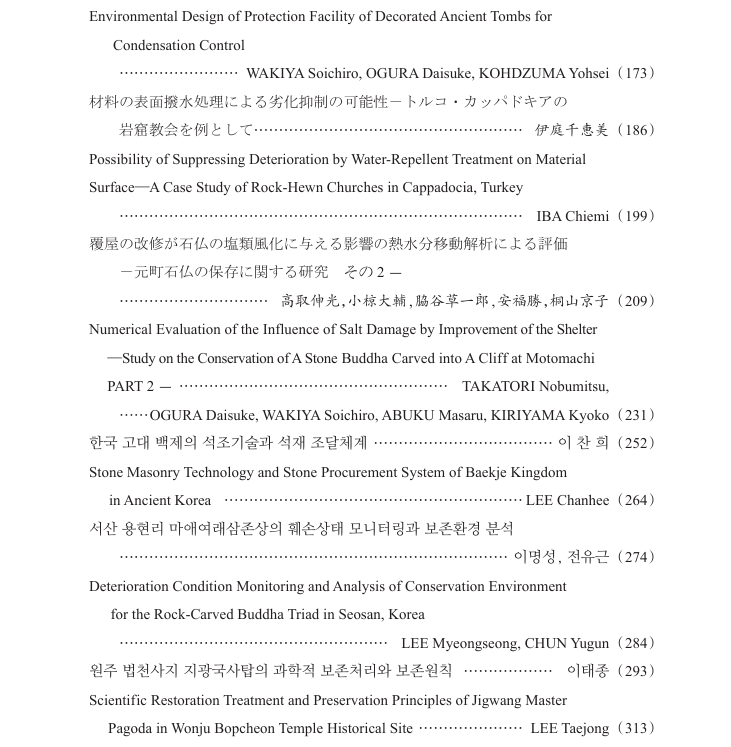
全书辑录十一篇代表性研究,涵盖中国石窟寺保护现状评估与关键技术突破、甘肃石窟寺群的区域保护规划与对策研究、砂岩与大理岩石质文物剥落特征及风化机制分析、大足石刻水害成因与渗流治理工程实践、盐害作用下砂岩劣化的模拟实验研究,以及日、韩石质文物营造技术与劣化环境监测等领域。研究方法论上,突破了传统经验性保护模式,强调现场勘察与实验室模拟的互证、微观结构分析与宏观性能测试的结合、原位监测数据与数值模拟的耦合,尤其在裂隙网络精细探测、毛细水-盐耦合劣化机制、多场耦合实验平台建设等方面体现了显著的方法创新。
尤为可贵的是,本书在收录论述时将技术理性与人文价值并重,在探讨防风化材料匹配性、灌浆材料耐久性、窟檐环境调控有效性等关键技术问题的同时,始终恪守"最小干预"与"真实性"保护原则,反思工程措施对遗产本体及其赋存环境的深层影响,系统梳理了敦煌莫高窟锚固工程、云冈石窟危岩体整治、大足石刻卧佛区防渗帷幕等典型案例。本书不仅提供了东亚季风气候区、干旱半干旱区及酸雨侵蚀区石质文物保护的差异化技术路径,更在区域合作框架下,探索了文化遗产保护"东方智慧"的理论化与标准化表达,对构建具有东亚特色的石质文物保护学术话语体系具有重要的范式意义。
目录
序言
东亚文明是人类最古老的文明之一,也是现存唯一延续不断的人类文明。古代东亚文化的许多方面在人类发展史上都长期处于领先地位,为人类社会发展作出了突出贡献。然而19世纪后,东亚的知识传统连同整个文化传统受到西方工业文明的严重冲击,其具有悠久历史的知识和文化传统出现了断裂。今天,人类共同面临着保护和传承、生存与发展的矛盾,如何保护祖祖辈辈继承的物质和非物质形态的文化遗产,是所有文化遗产保护工作者最为关注的。保护文化遗产的基本理念、观点、技术等是在与时俱进、不断变化的,它们产生于丰富的实践之中,还需要在不同文化背景、不同自然环境、不同技术传统和不同遗产类型的应用过程中不断被检验、证明、修正和充实,从而持续衍生出新的、具有时代特色和地域特点的、更符合实际需要的新内容。现在国际上通用的文化遗产保护规则,绝大多数是代表了西方的理念,是针对西方病根开出的药方,有些规则和方法对东方国家并不适用。东方国家经过近代一百多年的发展,保护文化遗产已经成为人们普遍认同的一种价值观。东亚各国不仅有着共同的文化渊源,而且还保留着千余年相同的文化形态以及记载、传播、保存物质文化的方式。随着历史的变迁,虽然各国的社会制度不同、国情有别,但在不同程度上都面临着文化遗产保护与修复的问题。因此,建立具有东亚特色的文化遗产保护理论与规则,指导东亚国家的文化遗产保护工作,并且在平等的基础上进行东西方之间的对话,便成为我们急迫的任务。
石质文物作为人类文明的重要载体,以物质形态凝结人类的精神追求与智慧结晶,是人类文明的“固态记忆”,其意义与价值跨越时空,深刻影响着我们对历史、文化、艺术和科技的理解。由于石材的耐久性,石质文物往往成为超越时代的记录载体。铭文、碑刻、摩崖题记等直接留存了古代文字、历史事件、制度规范等,弥补了纸质等有机质文献易损毁的缺陷,为重构历史提供了第一手资料,可谓人类文明的“活档案”。石质雕刻、画像(如雕塑、造像、画像石、岩画等)直观展现了不同文明的审美意识与工艺水平,同时也是文明交流的见证。然而,由于气候变化、自然灾害以及人为因素对石质文物的危害相互交织,石质文物面临的威胁是多重环境与人为风险的叠加:气候变化加剧物理化学风化,自然灾害造成结构性损毁,而人为干预失当和管理漏洞则放大了原有风险。
中日韩三国地理位置相近,文化交流频繁,石质文物在材质、工艺及历史文化背景上呈现出显著的共性。近年来,三国在石质文物保护领域的合作与交流日益深化,不仅推动了技术创新,也为区域文化遗产的可持续发展提供了范例。王金华教授和他的团队长期潜心于我国石质文物的保护实践与理论研究,坚持以开放的姿态与国际同行切磋交流,保持着友好的关系。三年多的疫情,虽然对国际交流产生了许多影响,但中日韩三国在石质文物保护领域的学术交流一直没有中断,而且在王金华教授及其团队的努力下,促成了诸多合作项目。
《磐石永续:东亚石质文物保护技术与实践集萃》,就是中日韩三国学者合作、交流与共享的成果。集萃选编了中日韩三国学者的11篇论文,基本上代表了东亚地区在石质文物分析、保护和修复的最新成果,从这些研究成果中不难发现,三国学者共同关注的主要有两个方面:一是从过去侧重利用其他领域的成熟方法进行保护应用,到现在更重视石质文物病害成因探究,进而有针对性地解决问题;二是多学科融合已经成为石质文物保护研究的必然趋势,所收论文涉及物理学、化学、材料学、建筑环境学、地质工程学、岩石学、测绘学、考古学等多种学科。同时,预防性保护也已成为三国学者的共同理念。东亚各国不仅在气候、土壤、周边环境等地理和文化层面,而且在文化遗产领域的资料信息方面,都具备了共享条件。
东亚各国在文化遗产保护修复领域,如材料、技术、理念、修复方针等各方面也存在很多共同点。时代需要东亚地区文化遗产保护修复工作者,共享保护修复哲学和保护修复的思考方式,寻找修复技术的相同点和差异,倾听彼此的见解,学习彼此的技术,交流各自的理念和技术。中日韩三国在石质文物保护领域的合作,既是对共同文化遗产的守护,也是构建东亚文化共同体的重要实践。尽管面临技术、政治等多重挑战,但三国有望通过技术互补、标准互认及人才共育,逐步形成具有东亚特色的保护模式。未来,随着数字化、智能化技术的深度应用,以及多边合作机制的不断完善,希望东亚诸国携手在石质文物保护领域引领全球范式,为人类文明的永续传承贡献东方智慧。
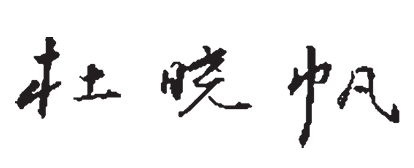
复旦大学文物与博物馆学系教授
复旦大学国土与文化资源研究中心主任
联合国教科文组织活态遗产与社区发展教席主持人
Foreword
East Asian civilization is among the oldest in human history and the only extant civilization to have continued without interruption. Many aspects of the ancient cultures of East Asia have long occupied a leading position in the history of human development and have made outstanding contributions to human society. Since the 19th century, however, East Asia’s intellectual tradition—together with its broader cultural tradition—has been severely impacted by Western industrial civilization, resulting in ruptures within its time honored systems of knowledge and culture. Today, humanity as a whole confronts the tension between preservation and transmission on the one hand, and survival and development on the other; how to safeguard the tangible and intangible cultural heritage passed down through generations is the foremost concern of all heritage professionals. The core concepts, perspectives, and techniques of cultural heritage conservation evolve with the times. They arise from rich practice and must continually be tested, validated, refined, and enriched through application across diverse cultural contexts, natural environments, technical traditions, and heritage typologies, thereby giving rise to new content—marked by contemporary and regional characteristics—that better meets practical needs. Most of the internationally prevailing rules for cultural heritage conservation represent Western ideas and are remedies formulated for Western conditions; some rules and methods are not applicable to Eastern countries. Over more than a century of modern development, the protection of cultural heritage has become a widely shared value across Eastern countries. The countries of East Asia share common cultural roots and have retained, for over a millennium, similar cultural forms and similar modes of recording, transmitting, and preserving material culture. Although historical change has produced different social systems and national conditions, all face, to varying degrees, the challenges of cultural heritage conservation and restoration. It is therefore an urgent task to formulate conservation theories and rules with East Asian characteristics to guide the region’s practice, and to conduct East—West dialogue on an equal footing.
As vital bearers of human civilization, stone cultural heritage condenses humankind’s spiritual pursuits and intellectual achievements into material form—the “solid-state memory” of civilization—whose significance and value transcend time and space and profoundly shape our understanding of history, culture, art, and technology. Owing to the durability of stone, such heritage often serves as a record that outlasts eras. Inscriptions, stelae, and cliffside records directly preserve ancient scripts, historical events, and institutional norms, compensating for the fragility of organic media such as paper and providing first-hand materials for reconstructing the past—truly a “living archive” of human civilization. Stone carving and pictorial imagery (including sculpture, figural images, pictorial stones, and rock art) present, in an immediate way, the aesthetic sensibilities and levels of craftsmanship of different civilizations, and they also bear witness to intercivilizational exchange. Yet the hazards to stone heritage—stemming from climate change, natural disasters, and human factors—interweave to create compounded environmental and anthropogenic risks: climate change intensifies physico-chemical weathering; natural disasters inflict structural damage; and inappropriate human interventions and management gaps amplify pre-existing vulnerabilities.
China, Japan, and the Republic of Korea are geographically proximate and culturally interconnected, and their stone heritage displays pronounced commonalities in materials, techniques, and historical—cultural contexts. In recent years, trilateral cooperation and exchange in the conservation of stone heritage have deepened, spurring technological innovation and offering models for the sustainable development of regional heritage. Professor Wang Jinhua and his team have long devoted themselves to both practice and theory in the conservation of China’s stone heritage, engaging openly with international peers and fostering collegial relationships. Although the more than three years of the pandemic affected international exchange in many ways, scholarly dialogue among the three countries in this field never ceased; through the efforts of Professor Wang and his team, numerous collaborative projects were advanced. Enduring Stone Historical Relics: Collection of East Asian Stone Heritage Conservation Practices is one such product of Sino—Japanese— Korean collaboration, exchange, and sharing. This volume brings together twelve papers by scholars from the three countries and broadly represents the region’s latest achievements in the analysis, conservation, and restoration of stone heritage. These studies reveal two shared areas of emphasis: first, the field has shifted from relying chiefly on mature methods borrowed from other disciplines toward a greater focus on elucidating the mechanisms of stone deterioration and thereby addressing problems in a targeted manner; second, interdisciplinary integration has become an inevitable trend, as reflected in contributions spanning physics, chemistry, materials science, building environmental science, geological engineering, petrology, geomatics (surveying and mapping), archaeology, and other fields. At the same time, preventive conservation has become a shared guiding principle.
Across East Asia, the conditions for sharing extend not only to geographical and cultural dimensions—climate, soils, and surrounding environments—but also to data and information in the heritage domain. The countries of the region likewise share many commonalities in conservation and restoration—materials, techniques, concepts, and approaches. Our times call upon heritage professionals in East Asia to share philosophies and modes of thinking about conservation and restoration; to seek both commonalities and differences in techniques; to listen to one another’s insights; and to learn and exchange methods and concepts. Trilateral cooperation in conserving stone heritage is both an act of safeguarding our shared cultural legacy and a vital practice in building a community of East Asian culture. Despite technical and political challenges, the three countries can, through technological complementarity, mutual recognition of standards, and joint cultivation of talent, gradually form a conservation model with distinct East Asian characteristics. Looking ahead, as digital and intelligent technologies are more deeply applied and multilateral cooperation mechanisms are further refined, I hope that East Asian countries will work together to lead a global paradigm in stone heritage conservation and contribute Eastern wisdom to the enduring transmission of human civilization.
Professor, Department of Cultural Heritage and Museology, Fudan University
Director, Centre for Land and Cultural Resources Research, Fudan University
Chairholder, UNESCO Chair on Living Heritage and Community Development
简介
《磐石永续:东亚石质文物保护技术与实践集萃》为复旦大学文物与博物馆学系文化遗产教研室主编“东亚文化遗产研究论丛”之一,系中日韩三国学者协作完成的区域性石质文物保护研究专集,系统呈现了东亚地区在石窟寺、摩崖造像等不可移动石质文化遗产保护领域的最新学术成果与技术实践。本书以物质遗存本体劣化机理与干预对策为核心关切,通过跨学科研究范式,将精细工程地质学、岩土力学、材料科学、环境考古与预防性保护理论深度融合,构建了从病害诊断、风险评估到科学处置的完整技术链条。
全书辑录十一篇代表性研究,涵盖中国石窟寺保护现状评估与关键技术突破、甘肃石窟寺群的区域保护规划与对策研究、砂岩与大理岩石质文物剥落特征及风化机制分析、大足石刻水害成因与渗流治理工程实践、盐害作用下砂岩劣化的模拟实验研究,以及日、韩石质文物营造技术与劣化环境监测等领域。研究方法论上,突破了传统经验性保护模式,强调现场勘察与实验室模拟的互证、微观结构分析与宏观性能测试的结合、原位监测数据与数值模拟的耦合,尤其在裂隙网络精细探测、毛细水-盐耦合劣化机制、多场耦合实验平台建设等方面体现了显著的方法创新。
尤为可贵的是,本书在收录论述时将技术理性与人文价值并重,在探讨防风化材料匹配性、灌浆材料耐久性、窟檐环境调控有效性等关键技术问题的同时,始终恪守"最小干预"与"真实性"保护原则,反思工程措施对遗产本体及其赋存环境的深层影响,系统梳理了敦煌莫高窟锚固工程、云冈石窟危岩体整治、大足石刻卧佛区防渗帷幕等典型案例。本书不仅提供了东亚季风气候区、干旱半干旱区及酸雨侵蚀区石质文物保护的差异化技术路径,更在区域合作框架下,探索了文化遗产保护"东方智慧"的理论化与标准化表达,对构建具有东亚特色的石质文物保护学术话语体系具有重要的范式意义。
目录
序言
东亚文明是人类最古老的文明之一,也是现存唯一延续不断的人类文明。古代东亚文化的许多方面在人类发展史上都长期处于领先地位,为人类社会发展作出了突出贡献。然而19世纪后,东亚的知识传统连同整个文化传统受到西方工业文明的严重冲击,其具有悠久历史的知识和文化传统出现了断裂。今天,人类共同面临着保护和传承、生存与发展的矛盾,如何保护祖祖辈辈继承的物质和非物质形态的文化遗产,是所有文化遗产保护工作者最为关注的。保护文化遗产的基本理念、观点、技术等是在与时俱进、不断变化的,它们产生于丰富的实践之中,还需要在不同文化背景、不同自然环境、不同技术传统和不同遗产类型的应用过程中不断被检验、证明、修正和充实,从而持续衍生出新的、具有时代特色和地域特点的、更符合实际需要的新内容。现在国际上通用的文化遗产保护规则,绝大多数是代表了西方的理念,是针对西方病根开出的药方,有些规则和方法对东方国家并不适用。东方国家经过近代一百多年的发展,保护文化遗产已经成为人们普遍认同的一种价值观。东亚各国不仅有着共同的文化渊源,而且还保留着千余年相同的文化形态以及记载、传播、保存物质文化的方式。随着历史的变迁,虽然各国的社会制度不同、国情有别,但在不同程度上都面临着文化遗产保护与修复的问题。因此,建立具有东亚特色的文化遗产保护理论与规则,指导东亚国家的文化遗产保护工作,并且在平等的基础上进行东西方之间的对话,便成为我们急迫的任务。
石质文物作为人类文明的重要载体,以物质形态凝结人类的精神追求与智慧结晶,是人类文明的“固态记忆”,其意义与价值跨越时空,深刻影响着我们对历史、文化、艺术和科技的理解。由于石材的耐久性,石质文物往往成为超越时代的记录载体。铭文、碑刻、摩崖题记等直接留存了古代文字、历史事件、制度规范等,弥补了纸质等有机质文献易损毁的缺陷,为重构历史提供了第一手资料,可谓人类文明的“活档案”。石质雕刻、画像(如雕塑、造像、画像石、岩画等)直观展现了不同文明的审美意识与工艺水平,同时也是文明交流的见证。然而,由于气候变化、自然灾害以及人为因素对石质文物的危害相互交织,石质文物面临的威胁是多重环境与人为风险的叠加:气候变化加剧物理化学风化,自然灾害造成结构性损毁,而人为干预失当和管理漏洞则放大了原有风险。
中日韩三国地理位置相近,文化交流频繁,石质文物在材质、工艺及历史文化背景上呈现出显著的共性。近年来,三国在石质文物保护领域的合作与交流日益深化,不仅推动了技术创新,也为区域文化遗产的可持续发展提供了范例。王金华教授和他的团队长期潜心于我国石质文物的保护实践与理论研究,坚持以开放的姿态与国际同行切磋交流,保持着友好的关系。三年多的疫情,虽然对国际交流产生了许多影响,但中日韩三国在石质文物保护领域的学术交流一直没有中断,而且在王金华教授及其团队的努力下,促成了诸多合作项目。
《磐石永续:东亚石质文物保护技术与实践集萃》,就是中日韩三国学者合作、交流与共享的成果。集萃选编了中日韩三国学者的11篇论文,基本上代表了东亚地区在石质文物分析、保护和修复的最新成果,从这些研究成果中不难发现,三国学者共同关注的主要有两个方面:一是从过去侧重利用其他领域的成熟方法进行保护应用,到现在更重视石质文物病害成因探究,进而有针对性地解决问题;二是多学科融合已经成为石质文物保护研究的必然趋势,所收论文涉及物理学、化学、材料学、建筑环境学、地质工程学、岩石学、测绘学、考古学等多种学科。同时,预防性保护也已成为三国学者的共同理念。东亚各国不仅在气候、土壤、周边环境等地理和文化层面,而且在文化遗产领域的资料信息方面,都具备了共享条件。
东亚各国在文化遗产保护修复领域,如材料、技术、理念、修复方针等各方面也存在很多共同点。时代需要东亚地区文化遗产保护修复工作者,共享保护修复哲学和保护修复的思考方式,寻找修复技术的相同点和差异,倾听彼此的见解,学习彼此的技术,交流各自的理念和技术。中日韩三国在石质文物保护领域的合作,既是对共同文化遗产的守护,也是构建东亚文化共同体的重要实践。尽管面临技术、政治等多重挑战,但三国有望通过技术互补、标准互认及人才共育,逐步形成具有东亚特色的保护模式。未来,随着数字化、智能化技术的深度应用,以及多边合作机制的不断完善,希望东亚诸国携手在石质文物保护领域引领全球范式,为人类文明的永续传承贡献东方智慧。
复旦大学文物与博物馆学系教授
复旦大学国土与文化资源研究中心主任
联合国教科文组织活态遗产与社区发展教席主持人
Foreword
East Asian civilization is among the oldest in human history and the only extant civilization to have continued without interruption. Many aspects of the ancient cultures of East Asia have long occupied a leading position in the history of human development and have made outstanding contributions to human society. Since the 19th century, however, East Asia’s intellectual tradition—together with its broader cultural tradition—has been severely impacted by Western industrial civilization, resulting in ruptures within its time honored systems of knowledge and culture. Today, humanity as a whole confronts the tension between preservation and transmission on the one hand, and survival and development on the other; how to safeguard the tangible and intangible cultural heritage passed down through generations is the foremost concern of all heritage professionals. The core concepts, perspectives, and techniques of cultural heritage conservation evolve with the times. They arise from rich practice and must continually be tested, validated, refined, and enriched through application across diverse cultural contexts, natural environments, technical traditions, and heritage typologies, thereby giving rise to new content—marked by contemporary and regional characteristics—that better meets practical needs. Most of the internationally prevailing rules for cultural heritage conservation represent Western ideas and are remedies formulated for Western conditions; some rules and methods are not applicable to Eastern countries. Over more than a century of modern development, the protection of cultural heritage has become a widely shared value across Eastern countries. The countries of East Asia share common cultural roots and have retained, for over a millennium, similar cultural forms and similar modes of recording, transmitting, and preserving material culture. Although historical change has produced different social systems and national conditions, all face, to varying degrees, the challenges of cultural heritage conservation and restoration. It is therefore an urgent task to formulate conservation theories and rules with East Asian characteristics to guide the region’s practice, and to conduct East—West dialogue on an equal footing.
As vital bearers of human civilization, stone cultural heritage condenses humankind’s spiritual pursuits and intellectual achievements into material form—the “solid-state memory” of civilization—whose significance and value transcend time and space and profoundly shape our understanding of history, culture, art, and technology. Owing to the durability of stone, such heritage often serves as a record that outlasts eras. Inscriptions, stelae, and cliffside records directly preserve ancient scripts, historical events, and institutional norms, compensating for the fragility of organic media such as paper and providing first-hand materials for reconstructing the past—truly a “living archive” of human civilization. Stone carving and pictorial imagery (including sculpture, figural images, pictorial stones, and rock art) present, in an immediate way, the aesthetic sensibilities and levels of craftsmanship of different civilizations, and they also bear witness to intercivilizational exchange. Yet the hazards to stone heritage—stemming from climate change, natural disasters, and human factors—interweave to create compounded environmental and anthropogenic risks: climate change intensifies physico-chemical weathering; natural disasters inflict structural damage; and inappropriate human interventions and management gaps amplify pre-existing vulnerabilities.
China, Japan, and the Republic of Korea are geographically proximate and culturally interconnected, and their stone heritage displays pronounced commonalities in materials, techniques, and historical—cultural contexts. In recent years, trilateral cooperation and exchange in the conservation of stone heritage have deepened, spurring technological innovation and offering models for the sustainable development of regional heritage. Professor Wang Jinhua and his team have long devoted themselves to both practice and theory in the conservation of China’s stone heritage, engaging openly with international peers and fostering collegial relationships. Although the more than three years of the pandemic affected international exchange in many ways, scholarly dialogue among the three countries in this field never ceased; through the efforts of Professor Wang and his team, numerous collaborative projects were advanced. Enduring Stone Historical Relics: Collection of East Asian Stone Heritage Conservation Practices is one such product of Sino—Japanese— Korean collaboration, exchange, and sharing. This volume brings together twelve papers by scholars from the three countries and broadly represents the region’s latest achievements in the analysis, conservation, and restoration of stone heritage. These studies reveal two shared areas of emphasis: first, the field has shifted from relying chiefly on mature methods borrowed from other disciplines toward a greater focus on elucidating the mechanisms of stone deterioration and thereby addressing problems in a targeted manner; second, interdisciplinary integration has become an inevitable trend, as reflected in contributions spanning physics, chemistry, materials science, building environmental science, geological engineering, petrology, geomatics (surveying and mapping), archaeology, and other fields. At the same time, preventive conservation has become a shared guiding principle.
Across East Asia, the conditions for sharing extend not only to geographical and cultural dimensions—climate, soils, and surrounding environments—but also to data and information in the heritage domain. The countries of the region likewise share many commonalities in conservation and restoration—materials, techniques, concepts, and approaches. Our times call upon heritage professionals in East Asia to share philosophies and modes of thinking about conservation and restoration; to seek both commonalities and differences in techniques; to listen to one another’s insights; and to learn and exchange methods and concepts. Trilateral cooperation in conserving stone heritage is both an act of safeguarding our shared cultural legacy and a vital practice in building a community of East Asian culture. Despite technical and political challenges, the three countries can, through technological complementarity, mutual recognition of standards, and joint cultivation of talent, gradually form a conservation model with distinct East Asian characteristics. Looking ahead, as digital and intelligent technologies are more deeply applied and multilateral cooperation mechanisms are further refined, I hope that East Asian countries will work together to lead a global paradigm in stone heritage conservation and contribute Eastern wisdom to the enduring transmission of human civilization.
Professor, Department of Cultural Heritage and Museology, Fudan University
Director, Centre for Land and Cultural Resources Research, Fudan University
Chairholder, UNESCO Chair on Living Heritage and Community Development